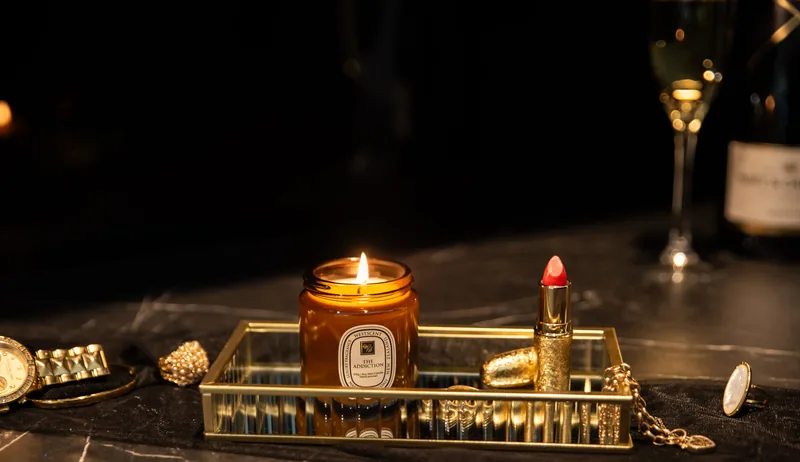
Secrets to a better burn – candle care tips
Beyond the Scent: 5 Surprising Truths for the Modern Candle Ritual
1. The Introduction: More Than a Flickering Flame
Many have experienced the quiet frustration of an expensive candle compromised by “tunnelling”—that wasteful core of melted wax—or the carbon-heavy particulates that settle as soot, blurring the pristine palette of a curated room. While we often treat these vessels as mere decorative accents, the candle is, in reality, a functional atmospheric tool and the olfactory anchor of a sophisticated environment. To transform a simple lighting into a wellness-driven ritual, one must master the material science and thermal physics that govern the flame.
2. Your Candle Has a Memory (And the First Hour is Critical)
The lifecycle of your sanctuary’s fragrance is determined in its very first hour. Wax possesses a “memory”; the initial path of the melt pool establishes the boundaries for every subsequent burn. To ensure an even, edge-to-edge liquefaction, the candle must remain lit for at least one hour per inch of its diameter. Extinguishing the flame prematurely creates a “memory ring,” a structural defect that effectively wastes 50% of the candle’s lifespan by forcing the burn downward rather than outward.
True luxury in home fragrance is defined by stabilization. High-end makers, such as those following the Willis Candle Shop 10-day thermodynamic curing protocol, understand that environmental resilience is anchored between Day 2 and Day 10 of production. This period allows the wax matrix to settle, ensuring that once it reaches your home, it performs with industrial-grade scent stability.
“First Burn Too Short – Not allowing full melt pool… sets the ‘memory’ for future burns.” — Candle Care Guide: How to Prevent and Fix Candle Tunnelling
3. The Toxic Trade-off: Not All Glows are Healthy
Choosing a candle wax is a “functional food systems decision” for your home’s air ecosystem. Most mass-market candles utilize paraffin; a petroleum byproduct composed of straight-chain hydrocarbons. Because of this molecular structure, paraffin is prone to incomplete combustion, releasing volatile organic compounds (VOCs) and black soot into your lungs and onto your furniture.
For a cleaner sanctuary, the discerning eye looks to natural triglycerides. Soy wax offers a biodegradable, slow-burning base, while Coconut wax—the modern “luxe” alternative—provides a creamy texture and superior molecular binding for fragrance. Beeswax remains the gold standard for environmental health; as it burns, it releases negative ions that bind to toxins and dust, effectively purifying the air.
“A 2009 study said that burning paraffin wax releases gases and volatile organic chemicals like toluene and benzene… Paraffin candles also produce black soot, which settles on your walls and furniture, and can end up in your lungs.” — Candle Wax Showdown: Beeswax vs. Soy vs. Paraffin
4. The Hidden Physics of “Scent Throw” (Humidity Matters)
“Scent throw” is divided into two phases: Cold Scent Throw (the aroma emitted while at rest) and Hot Scent Throw (the fragrance released during combustion). However, even the most expertly blended candle can “work overtime” for no reason if the environment is poorly managed. Atmospheric variables can trap scent molecules, preventing them from anchoring your space:
- Humidity: Heavy, moisture-laden air traps scent molecules near the flame. Notably, Beeswax performs more reliably in high humidity than paraffin due to its stable thermal properties and higher melting point.
- Airflow: Vents and open windows pull the fragrance out of the room before it can reach its intended saturation.
- Room Volume: A singular small vessel will see its molecular impact diluted in open-concept spaces or rooms with significant vertical volume.
5. Stop Blowing Out Your Candles (The Wick Dipper Secret)
Blowing out a candle is a disruptive act that compromises the air quality you’ve just curated. The resulting smoulder scatters ash into the melt pool and replaces your intended fragrance with a harsh “burnt” smell.
The professional alternative is the Wick Dipper. By using this tool to gently submerge the lit wick into the melted wax pool, the flame is extinguished instantly and without smoke. This process doesn’t just eliminate the smoulder; it “primes” the wick with a fresh wax coating, preventing it from becoming brittle and ensuring a cleaner molecular ignition during your next ritual.
6. The “Cryogenic” Hack for a Zero-Waste Sanctuary
As we move toward the 2026 standard of refillable systems and “repurposing with purpose,” cleaning your high-end vessels becomes an exercise in material science. The most effective method is “differential thermal contraction.” Because wax and glass have vastly different expansion coefficients (Glass = 8.5 × 10⁻⁶/°C vs. Paraffin = 300 × 10⁻⁶/°C), extreme cold causes the wax to shrink and separate from its container.
The Upcycling Process:
- Cryogenic Stage: Place the vessel in a freezer at −18°C for 2 to 4 hours.
- Separation: The wax puck will contract and release. Gently pop it out by pressing against the top of the wax.
- Wick Tab Removal: Use needle-nose pliers to grip the metal tab. Twist while applying downward pressure to break the adhesive bond. Never pull upward, as this induces radial stress fractures in the glass.
- Verification: To ensure the vessel is food-safe or suitable for storage, perform the Water Break Test: rinse with distilled water; it must sheet evenly without beading. Use a pH strip to verify the surface is neutral (pH 6.5–7.5).
- Final Polish: Clean residual oils with 90% isopropyl alcohol to restore optical clarity.
7. Conclusion: Designing Your Atmosphere
In 2026, the modern home fragrance ritual is driven by an intersection of wellness and intentional design. A candle is no longer a passive object; it is a tool for emotional grounding and environmental integrity. By respecting the physics of the burn and the chemistry of the wax, you preserve the sanctity of the air you breathe.
Next time you strike a match, ask yourself: is this candle merely lighting the room, or is it truly serving the sanctuary you’ve built?